The global community stands at a crossroads: record harvests and yield increases juxtaposed with escalating hunger and persistent food waste. Addressing this paradox demands visionary policies, strategic investments, and a collective resolve to transform our food systems.
Despite record harvests expected in 2025, more than 295 million people faced acute hunger last year. This stark contrast highlights systemic faults across production, distribution, and consumption.
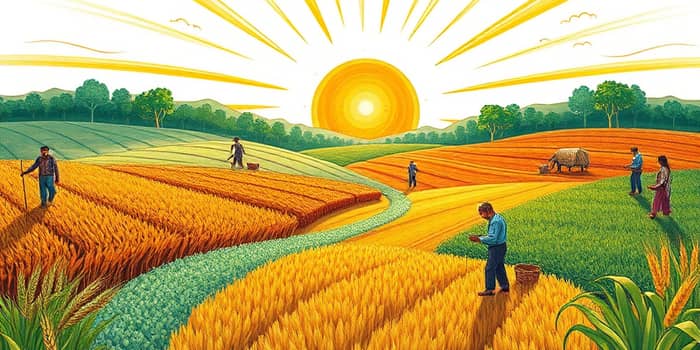
On one hand, yields of staple crops—corn, wheat, soybeans, and rice—are set to reach all-time highs, offering a glimmer of hope for food security. On the other hand, conflict, climate extremes, and financial shortfalls drive malnutrition and famine in regions such as Gaza, Sudan, Yemen, and Mali.
One-third of food produced is lost or wasted globally, exacerbating scarcity even as fields brim with grain. Reducing this waste represents one of the most impactful opportunities to feed millions more without expanding farmland or increasing emissions.
Governments worldwide provide an average of USD 842 billion annually in agricultural support, yet much of this funding prioritizes price protection over innovation. Underinvestment in productivity-enhancing infrastructure continues, leaving farmers without the resources they need to maximize yields sustainably.
Trade barriers and subsidies distort markets, fueling a geopolitical subsidy race that further fragments global food systems. Shifting from tariff conflicts to subsidy competitions may stunt price signals and inhibit the flow of affordable commodities to the most vulnerable populations.
Only 12.5% of sector transfers go to innovation, infrastructure, and general services. Closing this gap could unlock long-term productivity gains that benefit farmers, consumers, and the environment.
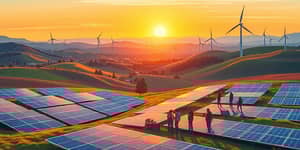
Emerging technologies—precision agriculture, drought-resistant seed varieties, and digital advisory platforms—offer pathways to boost yields while reducing water use and chemical inputs. Yet these tools remain out of reach for many smallholder farmers, particularly in low-income regions.
A strategic shift in public funding could catalyze private investment, creating public-private partnerships that scale transformative solutions for climate-smart agriculture.
Trade flows have become entwined with geopolitical strategies. The agricultural landscape is bifurcated between major powers, where commodities serve as diplomatic tools rather than purely economic goods.
A rules-based trade system remains essential to ensure food reaches the places of greatest need. Collaborative frameworks like the WTO Agreement on Agriculture must evolve to address modern challenges, from climate shocks to digital trade barriers.
Global temperatures continue to rise, threatening to erode the gains made in crop productivity. Even with adaptation, climate extremes—droughts, floods, heatwaves—will put additional strain on food security.
Scenario simulations indicate that ending undernourishment by 2034 can be achieved alongside a 7% reduction in greenhouse gas emissions if we pair emission-reduction technologies with a 15% productivity increase. This climate-productivity race underscores the need for integrated policies that tackle both yield and emissions.
To translate goals into reality, stakeholders at every level must act with purpose and urgency. Key measures include:
Local communities can champion cooperative models, pooling resources to access mechanization and storage facilities. Farmers’ associations and cooperatives have proven effective at negotiating fair prices and sharing risk.
Urban and peri-urban agriculture initiatives also play a role, turning vacant lots into productive gardens that supply fresh produce to nearby neighborhoods, reducing transportation emissions and strengthening local food systems.
No single actor can shoulder this challenge alone. Governments, private sector players, researchers, and civil society organizations must forge multi-stakeholder coalitions for action that align incentives across the value chain.
International financing mechanisms, such as climate funds and development banks, should prioritize projects that integrate yield improvement with carbon sequestration and water conservation.
Investors and philanthropists can accelerate progress by de-risking innovative ventures and scaling proven technologies in regions where they are needed most.
The road to sustainable food security is neither short nor easy. Yet the convergence of cutting-edge science, digital tools, and a growing global consensus on climate action provides a unique window of opportunity.
As we approach 2026—a year poised to test the resilience of our food systems—stakeholders must seize this moment to recalibrate policies, unlock investments, and deepen cooperation. By bridging the divide between abundance and access, we can ensure that no field overflows while any table remains empty.
Let this be our collective pledge: to harness the power of policy, innovation, and collaboration to feed the world sustainably, today and for generations to come.
References