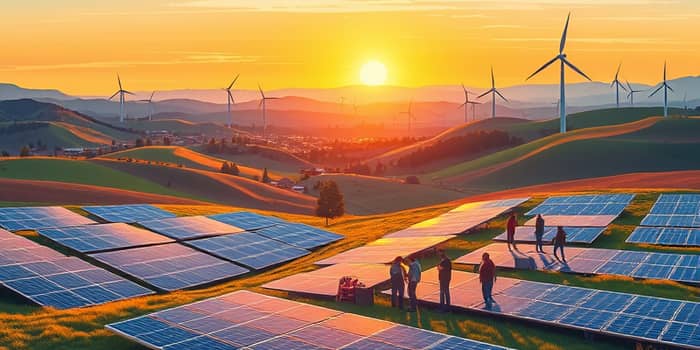
As our planet stands at a crossroads, the decisions we make today will echo through generations. The energy policies we craft now will determine whether we meet the demands of a growing global populace while preserving the delicate balance of our climate.
With each passing year, evidence mounts that a rapid shift away from fossil fuels toward renewable sources is not only possible but imperative. Yet, this transformation requires more than advanced technologies—it demands bold leadership and collaborative resolve from every sector of society.
By the end of 2024, renewable energy accounted for 46% of the world’s installed power capacity. In a single year, we added a record 585 gigawatts of new capacity—a 15.1% expansion. These figures are more than numbers; they represent communities gaining clean power, jobs being created, and pollution being cut.
Solar energy led the charge with 452 GW of new installations, followed by wind at 113 GW. In the first half of 2025, capacity additions in these sectors rose by over 60% year-on-year. Such momentum is a beacon of hope, yet it also exposes the urgency of scaling efforts rapidly to meet global climate goals.
Despite this progress, deployment remains uneven. China, the United States, and the European Union installed 489 GW—over 83% of new capacity—in 2024. In contrast, Africa saw only 4.2 GW added, a mere 0.7% of the global total. These disparities highlight the need for inclusive policies and targeted support to ensure no region is left behind.
The European Union generated 42.5% of its net electricity from renewables in Q1 2025, a slight dip from the previous year. Within this mix, wind power contributed 42.5%, hydro 29.2%, and solar 18.1%. Countries like Denmark and Portugal reached renewable shares above 85%, while others lagged below 15%.
From these varied outcomes, several lessons emerge:
At COP 28, nations vowed to triple global renewable capacity to 11 TW by 2030. Yet current growth rates fall short. To stay on a 1.5°C pathway, we need annual additions exceeding 1,120 GW—nearly double the record set in 2024.
This gap is not insurmountable. It calls for unwavering political will and strategic investment. Governments must streamline permitting processes, incentivize research, and mobilize public and private capital at unprecedented scale.
Every delayed project, every subsidy for legacy fuels, and every bureaucratic hurdle sets us back further. Conversely, each policy that accelerates approvals, scales manufacturing, or fosters international collaboration can yield breakthroughs with global impact.
Our energy future will be shaped by a diverse portfolio of clean and firm power sources. Beyond wind and solar, emerging technologies will bolster reliability and resilience:
Strategic deployment of these resources can transform grids from fragile networks into robust platforms for innovation and growth.
Effective energy policy requires a blend of ambition and pragmatism. Key pillars include:
Data-driven frameworks must guide resource allocation, ensuring every dollar spent delivers maximum climate and social benefit. International cooperation is equally vital, as technology sharing and finance mechanisms can accelerate progress in emerging economies.
The energy transition is not a solitary endeavor. It calls for businesses, policymakers, researchers, and citizens to forge partnerships rooted in trust and shared purpose. Every homeowner installing rooftop panels, every investor funding a new wind farm, and every legislator championing reform adds momentum.
Communities that embrace renewable projects see tangible benefits: cleaner air, lower energy bills, and new employment opportunities. When local voices shape project design, resistance gives way to pride and ownership.
Let us remember that each community, large or small, holds great power. From rural villages to sprawling metropolises, our collective choices will shape the energy systems of tomorrow.
Meeting the challenges of climate change and sustainable development demands more than incremental tweaks—it requires a profound reimagining of how we produce, distribute, and consume energy.
Policymakers must act decisively to create enabling environments for clean technologies. Industry leaders should invest in innovation and equitable supply chains. Civil society can drive accountability and amplify diverse perspectives. And individuals, through everyday choices and civic engagement, can tip the scales toward a brighter future.
The path ahead is complex, but the destination—a resilient planet powered by clean, accessible energy—is within reach. By uniting behind bold policies, innovative solutions, and shared responsibility, we can secure a sustainable future for all.
References