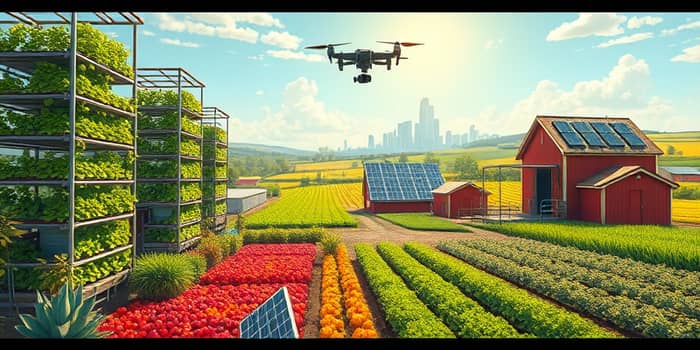
As global populations surge and environmental pressures mount, the agricultural sector stands at a crossroads. Innovations in agri-tech combined with thoughtful sourcing strategies promise to reshape how we grow, distribute, and consume food. This article explores key trends, market forces, and practical steps toward a more sustainable and productive future.
The scale of opportunity in agriculture and technology integration has never been larger. The global agritech market is projected to soar from $24.42 billion in 2024 to $48.98 billion by 2030, driven by advances in automation, data analytics, and service-based models.
Meanwhile, the broader agriculture market is expected to expand from $15.5 trillion in 2025 to more than $20.6 trillion by 2029. This robust growth underscores the urgency of adopting new tools to meet the needs of nearly 9.7 billion people by mid-century.
New technologies are transforming fields and greenhouses. Precision agriculture powered by AI uses sensors, drones, and satellite imaging to fine-tune planting schedules, irrigation levels, and nutrient delivery, reducing waste and boosting yields.
Robotics and automation handle repetitive tasks, offering 24/7 operation and minimizing human error. Agri-TaaS platforms now offer subscription-based access to these technologies, making advanced tools available to small and medium farms that lacked capital for large-scale investments.
Biotechnology advances—such as drought-resistant seeds and microbial biofertilizers—are further enhancing resilience. Companies exploring synthetic biology and microbiome optimization are set to redefine crop protection and yield potential.
Beyond sustaining current systems, regenerative agriculture aims to restore soil health, biodiversity, and water cycles. Through practices like cover cropping, reduced tillage, and integrated livestock management, farmers can sequester carbon and rejuvenate ecosystems.
Data platforms now enable robust carbon sequestration monitoring tools, offering transparent verification of sustainable practices. This emerging market allows farmers to earn revenue by selling carbon credits tied to improved soil health.
Consumers and regulators alike demand traceability. Companies are shifting toward nearshoring and localized procurement to minimize disruptions from trade volatility and climate shocks. This sustainable sourcing and circular supply chain approach reduces food miles, strengthens regional economies, and builds trust.
Advanced digital tools provide real-time visibility across the supply chain, ensuring that every ingredient meets ESG criteria. From fair labor standards to animal welfare metrics, buyers scrutinize environmental and social credentials as rigorously as price.
Waste reduction and circularity are becoming standard practice. Brands incorporate upcycled ingredients—once considered waste streams—into new products. Meanwhile, innovative packaging solutions made from compostable or reusable materials reduce environmental footprints.
Shifting dietary preferences are fueling growth in plant-based and lab-cultivated proteins. What began as a niche market is now embraced by flexitarians seeking health, taste, and ethical assurance. AI-enabled platforms even offer personalized nutrition plans based on individual health data and preferences.
Health and wellness continue to dominate purchasing decisions, with transparency and minimal processing taking center stage. Younger demographics, especially Gen Z and Millennials, are willing to pay premiums for products with credible sustainability claims and traceable origins.
Despite rapid innovation, barriers remain. High upfront costs and complex regulatory landscapes slow the adoption of lab-grown proteins and advanced automation. Harmonizing data standards across platforms is essential to achieve seamless traceability.
Scaling regenerative practices requires reliable measurement, reporting, and verification frameworks. Once data integrity is ensured, farmers and corporations can confidently invest in sustainable transformations.
Looking forward, partnerships between governments, NGOs, and private enterprises will be crucial. Collaborative research initiatives and policy incentives can accelerate deployment of both traditional and cutting-edge approaches.
The future of food hinges on integrating technology with sustainability at every stage of the value chain. From digital sensors in the soil to cellular agriculture in the lab, each innovation offers a piece of the puzzle. By championing both productivity and ecological health, stakeholders can ensure that the world’s plates remain full, nutritious, and ethically sourced for generations to come.
References